
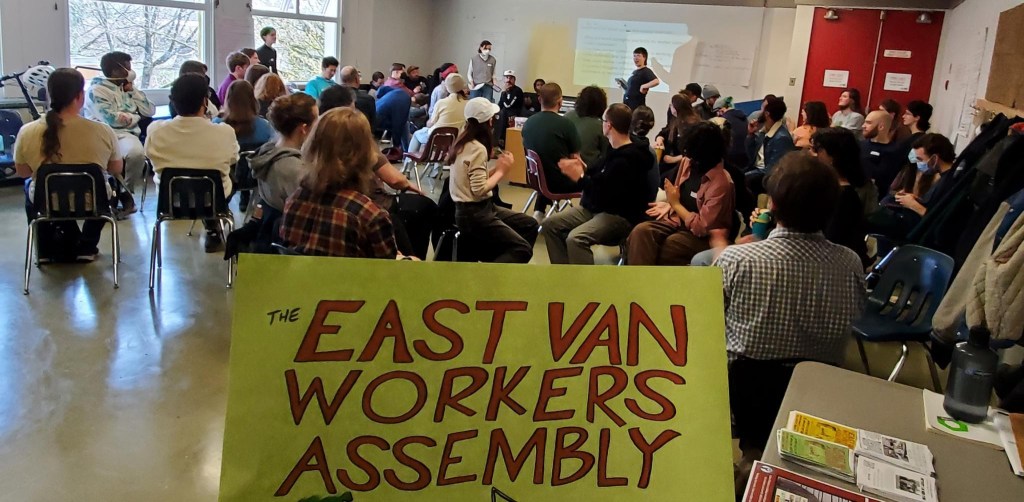
In our last Assembly, we presented the capitalist system of ownership over production of the material substance of life (food, clothes, shelter, communication, everything!) and where workers are paid mostly-shit wages (hustle culture) to make and distribute those things. In this system all of the profits are taken by the owners: there are owners we love to hate (food devils) but there are also many smaller capitalists who have to fiercely compete to stay alive, offloading those pressures onto their workers. Ultimately, capitalist profit is the organizing mechanism of our economy.
In the last Assembly we discussed and debated our first platform point: Establish public ownership of the means of production. We had some interesting discussions, and one theme that emerged was grappling with the problem of how to overcome the limitations of individual solutions to political problems, and how to connect our immediate resistance to a longer term strategy! Billy ended his presentation last time with the challenge: Power and control in the economy is based on ownership. In the current system of private ownership workers can only exert some limited power over economic life through collective action.
This leads into our second platform point: Worker control over production.
Here’s a snapshot of what we’ve heard from those of you who have taken our economic survey:
- Loosen restrictions on unions so more workplaces can be unionized and more workers can exert control over their industries.
- Fair wages, unionized labour, needs of the workers prioritized above that of the bosses.
- Unionize all industries, higher taxes for corporations, more cuts of profit going to the workers, price caps on basic necessities, price caps on rent
- Democratized workplaces, publicly owned housing, more universalized universal health care.
- We need redistribution of money AND power in the economy.
We want worker control, but we don’t imagine it’s the solution to our exploitation. Worker control over individual workplaces is insignificant in isolation from public economic planning and ownership of the means of production.
Worker control without public ownership is limited by:
- Ongoing exploitation;
- Still a profit-driven economy;
- Where production goes where there’s money to be made;:
- With no public oversight of where we put our energy, labour, resources as a society,
- Our whole economy remains run by a handful → and monopoly control is deepening.
However, Contract negotiations, strikes, and public pressure campaigns are also a form of control, and ways we can exert some control over the economy under capitalism. These small examples also train us to build and use our collective power as workers.
Struggles that increase workers’ collective power are a part of class struggle.
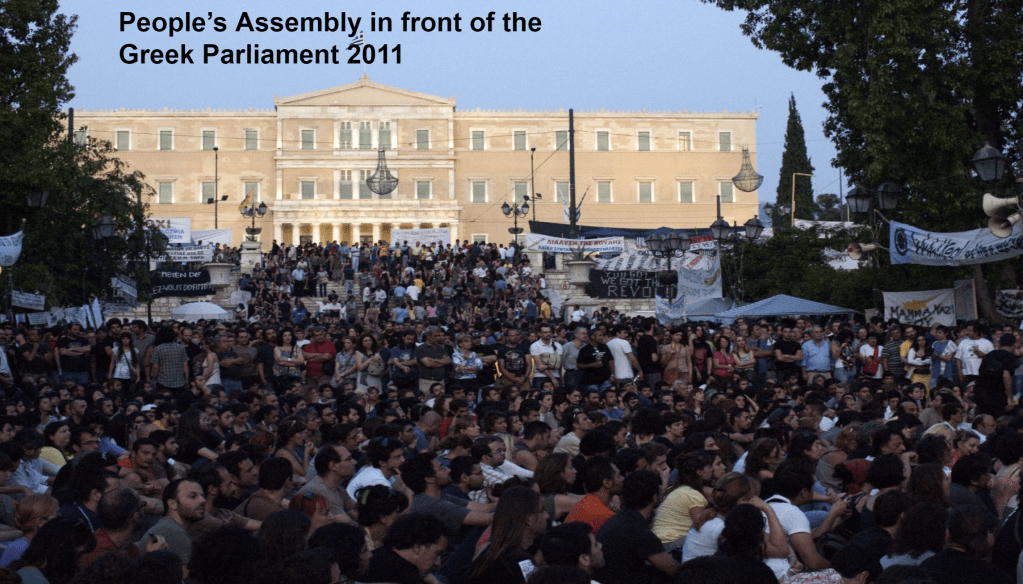
Vio.Me workers seize a factory in Greece. The Greek government financial and debt crisis triggered by economic recession, increasing debt to GDP ratio, and European integration with the EU (much more powerful central economies such as Germany), provoked austerity measures which ultimately led to 12 rounds of tax increases, public spending cuts, and packages of regressive legislation. The unions, left parties, and the people fought back! There were general strikes and massive protests of up to 1⁄2 million people.

During this economic and political turmoil, the Philippou family and shareholders abandoned their construction components factory and left their workers without pay. The workers seized the building and equipment, and barricaded the site, preventing the owners from removing equipment.
“We don’t walk away from what belongs to us.
Factories in the hands of the workers,
production in the hands of society.”
The workers converted production from building materials (mortars, plasters, adhesives, jointing materials) to environmental cleaning products. While they’ve managed to stay in operation, they are squeezed in the capitalist market, relying on solidarity funds to defend themselves from eviction from the property which is still privately owned. It’s an interesting project, but it’s not a real economic alternative to capitalism.
Let’s look next at examples of worker control enacted in the form of mass campaigns, union fights, and workplace actions. We will be looking at examples from right here in BC for each of these categories.
A few points to make before looking at the examples:
These actions were not revolutionary in nature. The actions do not propose an alternative to the status quo, but they do represent a challenge to the status quo. While they are interesting examples, it is also important to consider how these actions fall short of making a lasting impact towards ending capitalism. In each example there is an unrealized potential: a potential to contribute to a larger movement towards a society and economy built by workers and for workers. By prioritizing short term gains without considering an alternative vision of the future, these actions failed to break out of the constraints of capitalism.
In each example, the actions provide a significant opportunity for increasing the political consciousness of the working class. Getting involved in campaigns, union fights, or work place actions can be a way for workers to experience solidarity with other workers. Workers may get politicized and radicalized through direct action and education, and they may be more willing to get involved in more political action in the future. However, this can work both ways. When the actions fail, workers can get disillusioned about political action and may be less likely to get involved in the future.

An example of a mass campaign of worker control in BC is Operation Solidarity in 1983. This was the largest political protest in BC history. It began as a response to a set of 26 pieces of legislation presented by the Socred Government that would have dramatically negative impacts on workers and society in general. When the government introduced the new legislation, the reaction was swift. Unions, community groups, political organizations, religious groups, and others joined together to form a coalition movement to oppose the government and call for a general strike. This was a movement that was attempting to impose worker control on society and the economy by affecting the legislative agenda of the government. Operation Solidarity represented over 400,000 workers and the leaders of the movement were primarily union leadership. The intention was to represent the demands of workers but unfortunately, in the end, the union leadership betrayed the demands of the workers and the people of BC. In order to settle a few underwhelming contract negotiations the union leaders agreed to end the Operation Solidarity movement. While Operation Solidarity was a failure by most measures, it was a powerful moment where people all over the province from almost all industries were involved in political conversation and political action. The working class of BC was being politicized like it had never been before. But in the aftermath of the failure and the betrayal by union leadership, many individuals were disillusioned with political involvement.
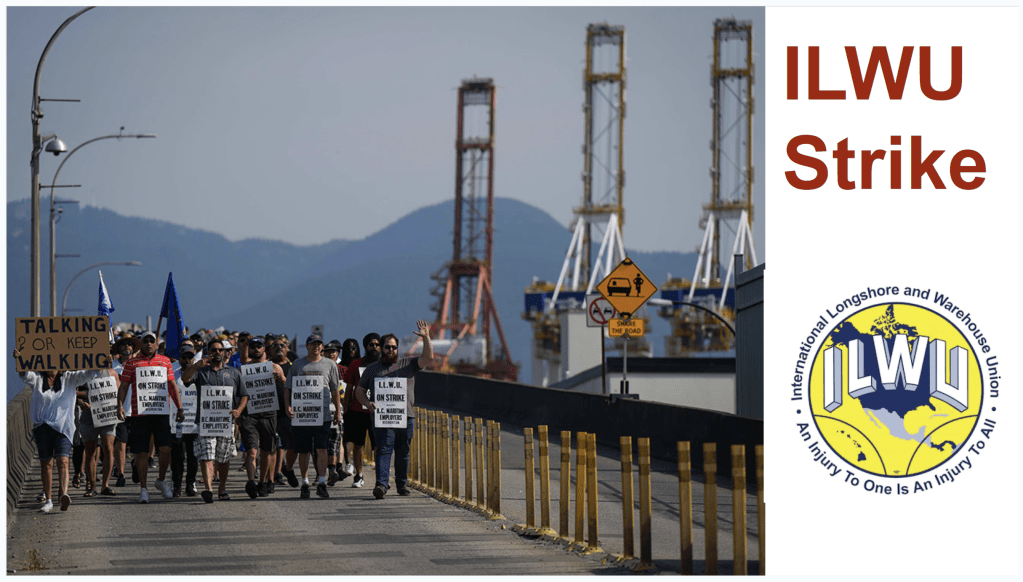
A recent example of a union fight that shows the power of worker control is the ILWU strike that shut down the Port of Vancouver. A Union representing 7400 workers blocked access to the port, and throughout the strike the estimate of economic losses was between 500 and 800 million dollars a day. This action is an example of worker control over an entire industry. By identifying and targeting the port as a weak point and vulnerability of the capitalist transportation industry, a relatively small group of workers were able to impose a massive level of control and impact. Similar to Operation Solidarity, this was a moment that triggered conversations about workers rights at all levels of government and almost all aspects of society across the country. During this strike people all over the country were being confronted by the reality of worker power. A lot of the media and government attention towards this strike was obviously very negative. The federal government even threatened at one point to convene the house of commons during the summer just to pass back to work legislation. The original agreement was initially rejected by the ILWU contract caucus and workers were back on the picket line for one day before this new strike was deemed illegal. They managed to come to an agreement with the employer, but it all happened under the threat from the federal government, pressure from industry groups across the country, negative reports in the media, and an increasing impatience from the public. This strike represented a fundamental threat to one of the core elements of capitalism: unstoppable access to international trade. By damaging that access, the ILWU workers were made a target for attacks from all levels of capitalist aggression. In the face of all this, they were still able to win a new deal.
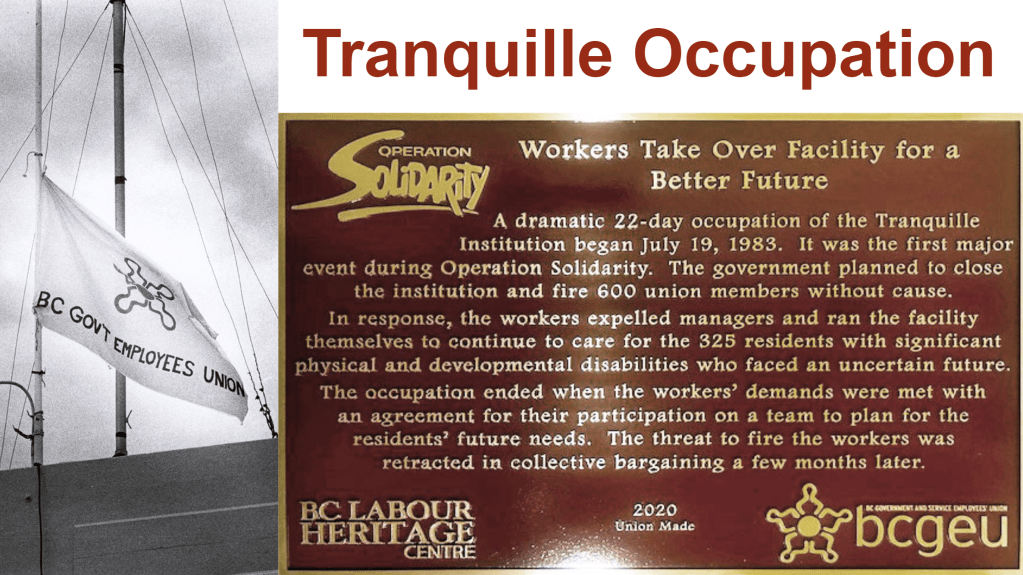
Right at the start of Operation Solidarity, there was a significant workplace action that took place in Kamloops: The Tranquille Occupation. The Tranquille facility was supportive housing for adults with physical and developmental disabilities. It was going to be shut down as a result of the government’s proposed legislation. All 600 unionized staff would be fired and there was not a sufficient plan to care for the residents. In response, the staff of Tranquille joined together to occupy their workplace so they could continue to provide safe care to the residents of the building. They evicted their managers from the building, changed the locks on the door, and flew a union flag in place of the provincial flag on top of the building. The occupation lasted for 22 days, and the workers were able to continue to provide all necessary elements of care during that time and the facility functioned effectively. The occupation ended when the workers’ demands were met. This action is significant on multiple levels. It provides an example of what workers can achieve when they work together, and proves that workers are capable of running their workplaces without bosses and managers. It is also significant because of the timing of the action. It happened right at the start of the Operation Solidarity coalition and provided inspiration to workers all across the province to take action in their own workplaces.
In each of these examples we see the power of workers, but we also see the failures and weaknesses of capitalism. We see how workers can take advantage of those failures and weaknesses to achieve their own goals. The capitalist system that we currently live under is constantly failing workers, but it’s not always easy for workers to see these failings. It is also not easy for workers to imagine an alternative system that would serve their needs better. Mass campaigns, union fights, and workplace actions can be used as ways to draw attention to the failures and weaknesses of capitalism while raising consciousness about possible alternatives.

 United in Struggle
Leave a comment